
Beyond Saigon Cinnamon:
A Story About Vietnam’s Cinnamon
Centuries of heritage, crooked trees, and the community that keeps it alive


Going up to cinnamon groves from the town of Trà My, Quảng Nam
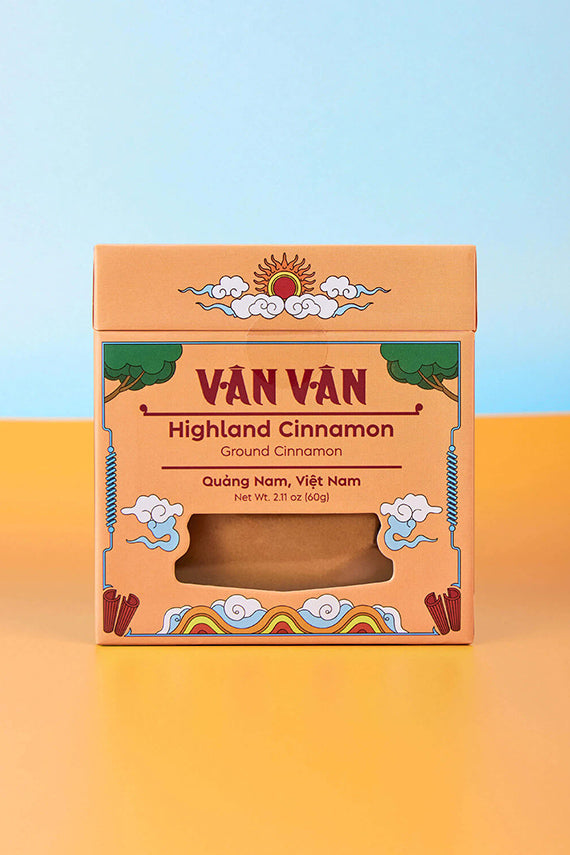
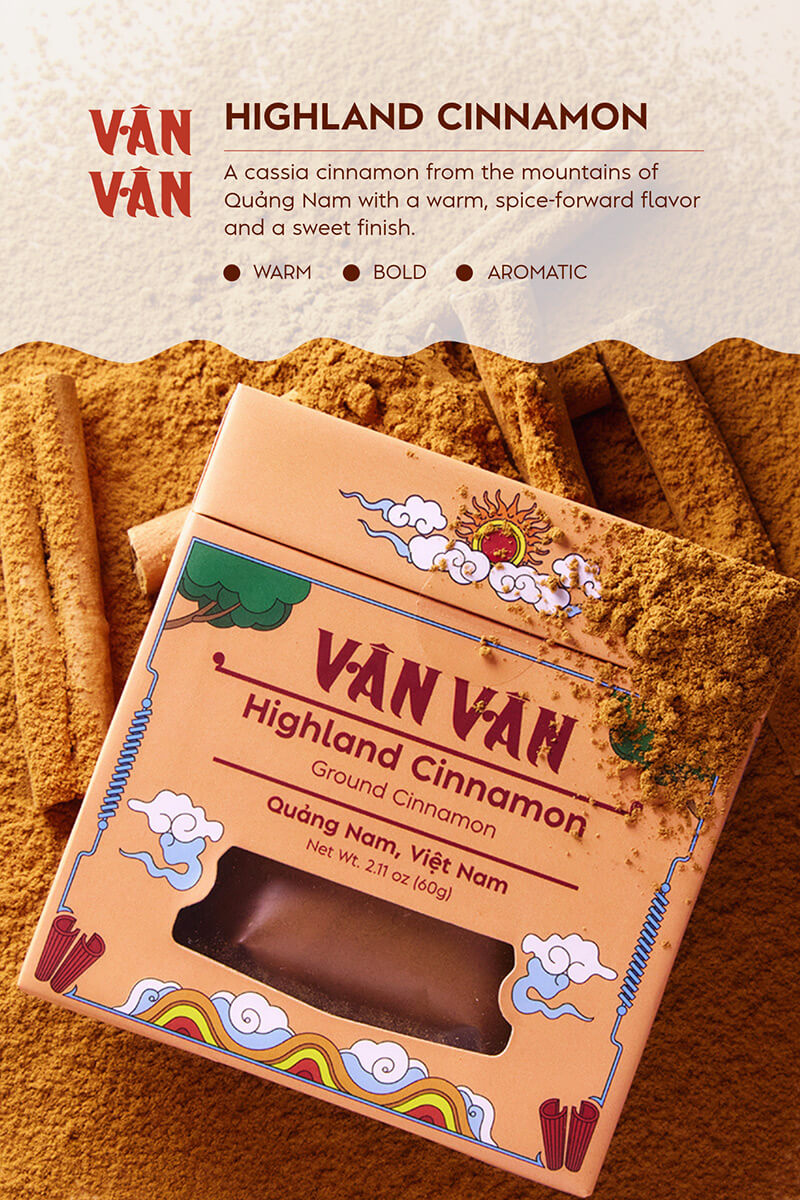
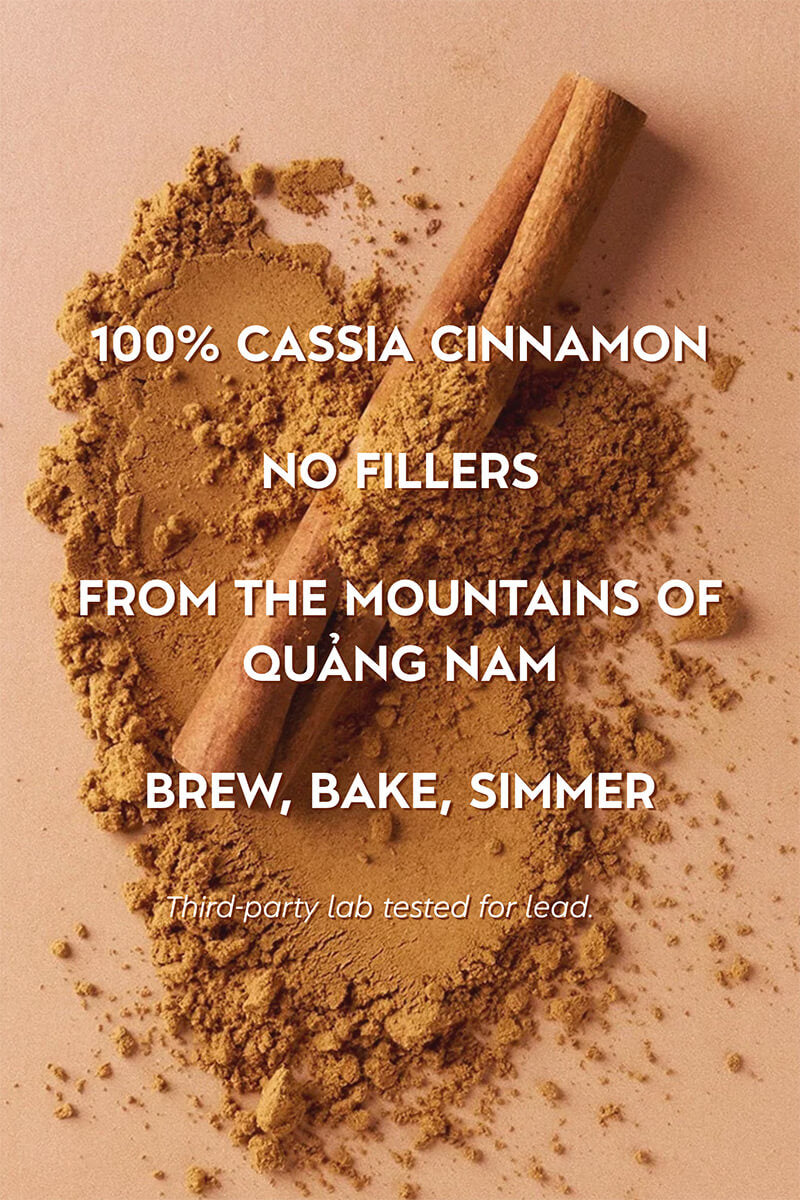
“Saigon Cinnamon” is a popular trade name, but most U.S. labels don't tell you where in Vietnam the cinnamon was grown or which variety it is. Our Highland Cinnamon is quế nam (southern cinnamon), grown in the mountains of Trà My, Quảng Nam, and sourced from the ethnic minority communities who harvest it.
We first visited Trà My, a tiny town in the Quảng Nam mountains, in 2025. Due to some miscommunication, we never made it to the cinnamon forest. We had already spent more than three hours driving from Đà Nẵng, and reaching the forest would have required another five hours by scooter and on foot, so we decided to come back another time.

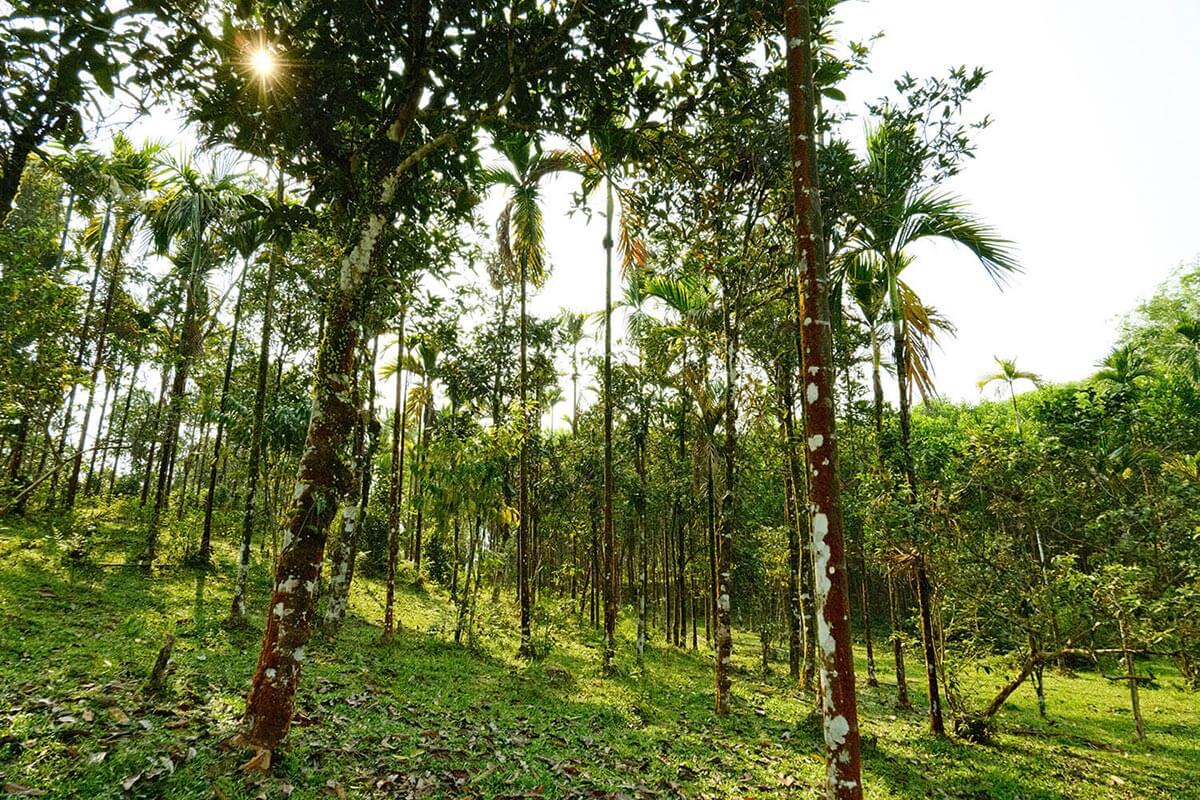
Cinnamon hill in Trà My, Quảng Nam
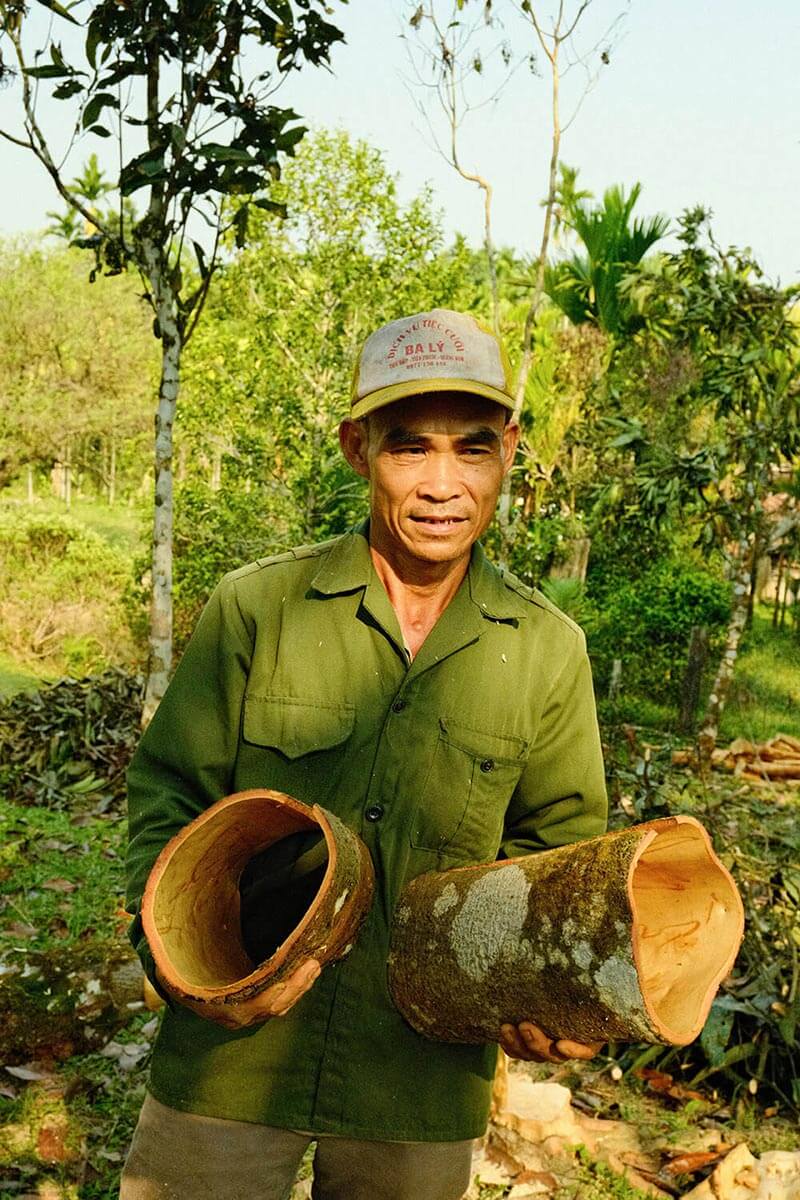
In March 2026, we returned. This time, we met Tân, a local grower who has been tending and harvesting cinnamon for almost 30 years. We followed him to a small hill where his wife had already started working. It was a beautiful, sunny spring morning, and the air smelled of sweet cinnamon.
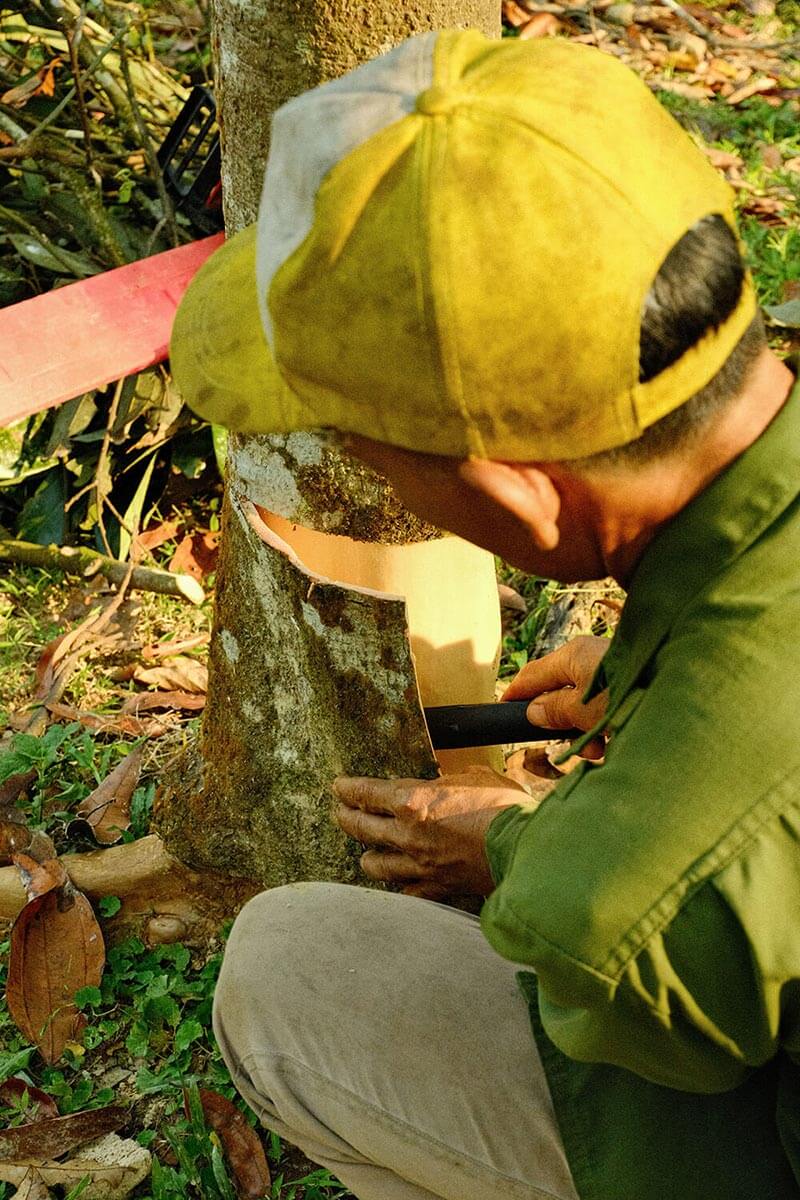
After walking us through the grove, Tân began cutting into a tree and swiftly stripping the bark, with Vinahouse echoing from somewhere in the distance. He told us stories about the cinnamon trees and narrated each step of his process. Out of curiosity, we asked if he had ever heard of Saigon cinnamon. “Cinnamon doesn’t grow in Saigon,” he looked at us, confused.
Most growers and harvesters we met are not familiar with Saigon Cinnamon. As Tân pointed out, no cinnamon grows in the city areas. Sài Gòn (officially known as Hồ Chí Minh City) is a major city, so perhaps it is the appeal. Growers in Vietnam differentiate cinnamon by its variety and its origin. Two types of Vietnamese cassia cinnamon are: quế nam (southern cinnamon) in the central highlands, and quế bắc (northern cinnamon).

Young cinnamon trees

Mr. Tân with his fresh cinnamon bark
Southern cinnamon is native to central mountain areas such as Quảng Nam and Quảng Ngãi, and it is an essential regional crop with a long, rich history. Northern cinnamon concentrates mostly in newer growing regions of northern Vietnam, such as Yên Bái and Lào Cai. So what sets the two apart?
You can often tell southern cinnamon by the tree itself. The trunk is crooked and knotted. The rough, gnarled bark is darker and thicker than cinnamon from other regions. The flavor is bold, warming, lingering, and naturally sweet. A study by Vietnam’s Soils and Fertilizers Institute found oil content of 8.93 to 10.91% in southern cinnamon bark, well above other growing areas. In addition, due to its thick cooked trunk, the bark cannot be rolled into sticks.

Freshly cinnamon barks

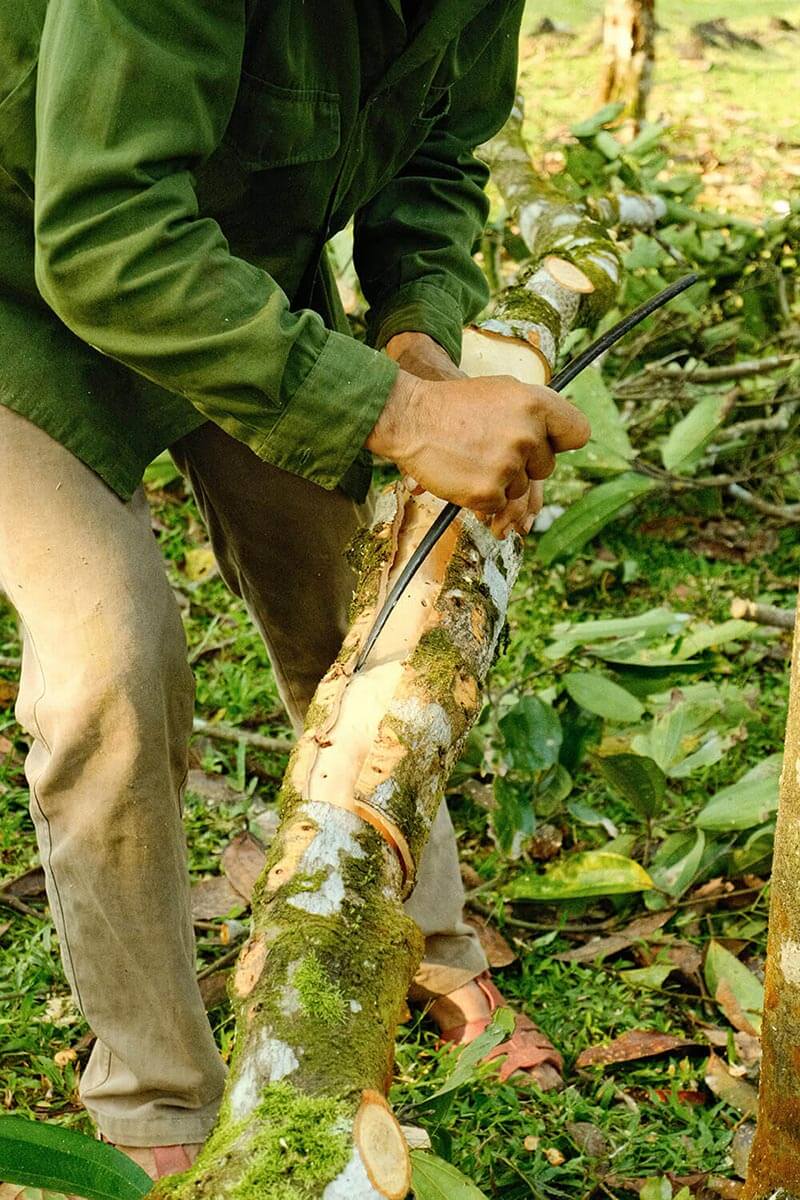
Cinnamon barks from young branches
Beyond its look and flavor, southern cinnamon holds a special place in Vietnamese history and spiritual life. In the mid-17th century, the king of Đại Việt (the southern kingdom) presented it as a gift to the king of Siam. The cinnamon left a great impression, so the Siamese King referred to it as Cao Sơn Ngọc Quế, meaning “the treasured cinnamon of high mountains.”
Under the Nguyễn dynasty, the same cinnamon variety was sent to the emperor every year as tribute from the region. Emperor Minh Mạng had the cinnamon tree engraved on the Nghị Đỉnh (Nghị Cauldron), one of the Nine Dynastic Urns (Cửu Đỉnh) at the Imperial Palace in Huế, the Nguyễn capital. The engraving marks cinnamon as a native tree of the mountains and a specialty of the country. That history and flavor are part of why we chose to source our Highland Cinnamon from Trà My, Quảng Nam. The other part is how dearly the local communities hold the tree.
One legend tells of a young boy who got lost and found a tree deep in the forest. Sick and hungry, he chewed on its bark and regained his strength. He carried a piece back with him, found his way back to the village, and told everyone about the magical tree. The folk tale is still told today and schoolchildren reenact it on special occasions.

Cinnamon tree image engraved on the Nghị Cauldron at the Imperial Palace in Huế
With its healing properties, the cinnamon trees hold a special place in the spiritual beliefs of the ethnic minority communities of Quảng Nam. To Xơ Đăng and Ca Dong people, the trees are as valuable as gold. They are gifts from God and a form of wealth. Xơ Đăng families give their children a cinnamon grove as a dowry. The grove is planted when the child is born and is ready to harvest 15 years later at the earliest. When cinnamon prices dropped, local folks told us that many Kinh growers (the ethnic majority in Vietnam) chopped down their groves to make way for more profitable crops. However, thanks to this custom among the Xơ Đăng people, the southern cinnamon has been preserved despite volatile market swings.

Harvesting cinnamon in Trà My

Harvesting cinnamon in Trà My
In Trà My, cinnamon trees are planted and left to grow naturally, with little interference, until peak maturity. Harvest typically begins in March and April, but the work starts much earlier. Growers ring the trunks of the trees chosen for harvest, which reduces the water traveling up from the roots and concentrates the oil in the bark. Then the bark is separated from the trunk by hand, using a sharp, horn-shaped tool. It is dried face-down on the ground, shielded from the harsh highland sun, before going to a factory for processing.
Once the bark is separated, the trunks are cut down and sold as firewood, completing the life cycle of the cinnamon tree.
The communities’ care for the trees goes beyond commercial values. In Ca Dong villages, the ancient cinnamon trees are never stripped for bark. Villagers gather only their seeds. Thousands of descendants of these “elder trees” now grow in the surrounding forests.
In recent years, the local government has worked closely with communities to plant more southern cinnamon and put this treasure back on the map. Our Highland Cinnamon comes directly from growers in the Quảng Nam mountains and it is our way of keeping the cinnamon story going.